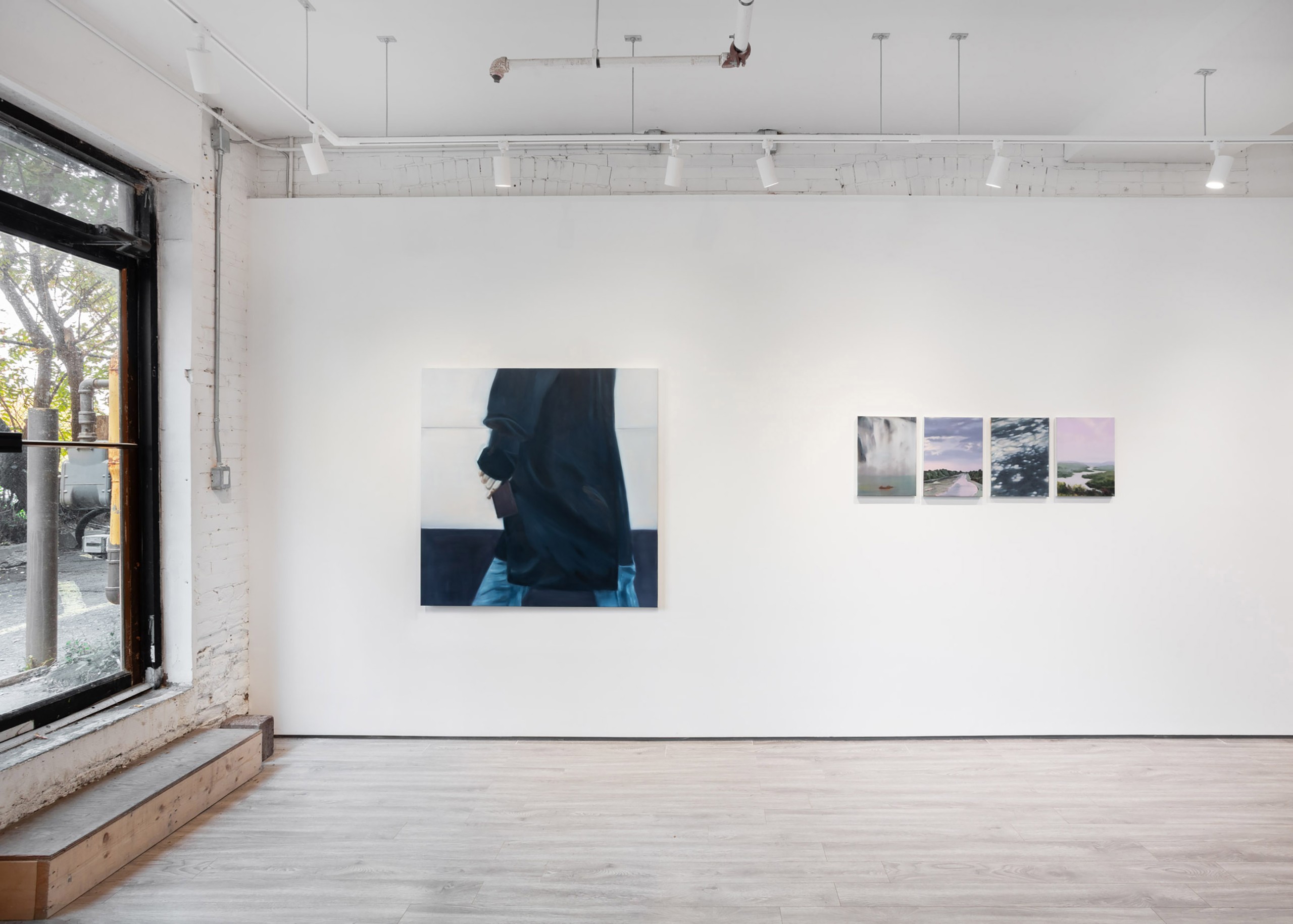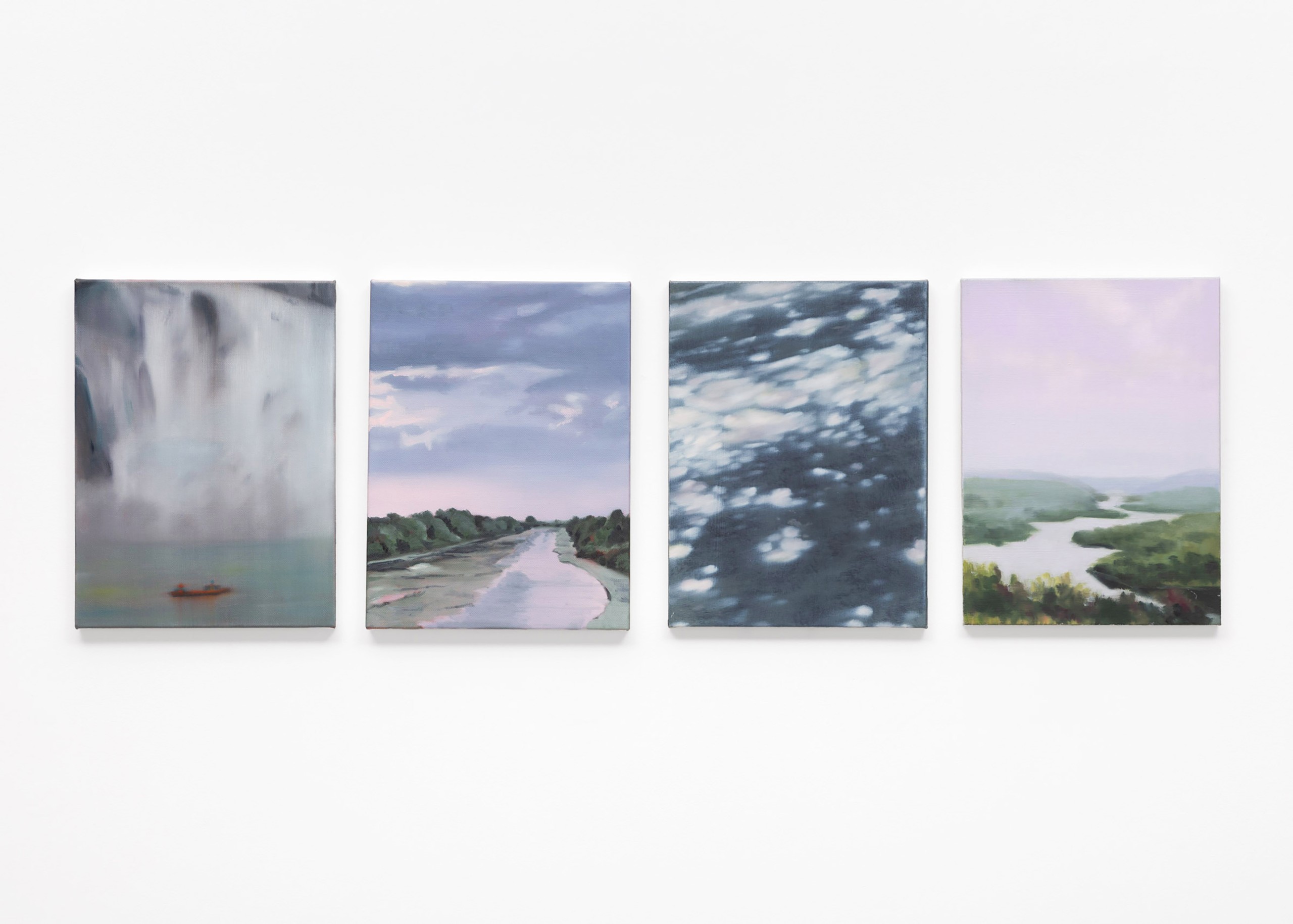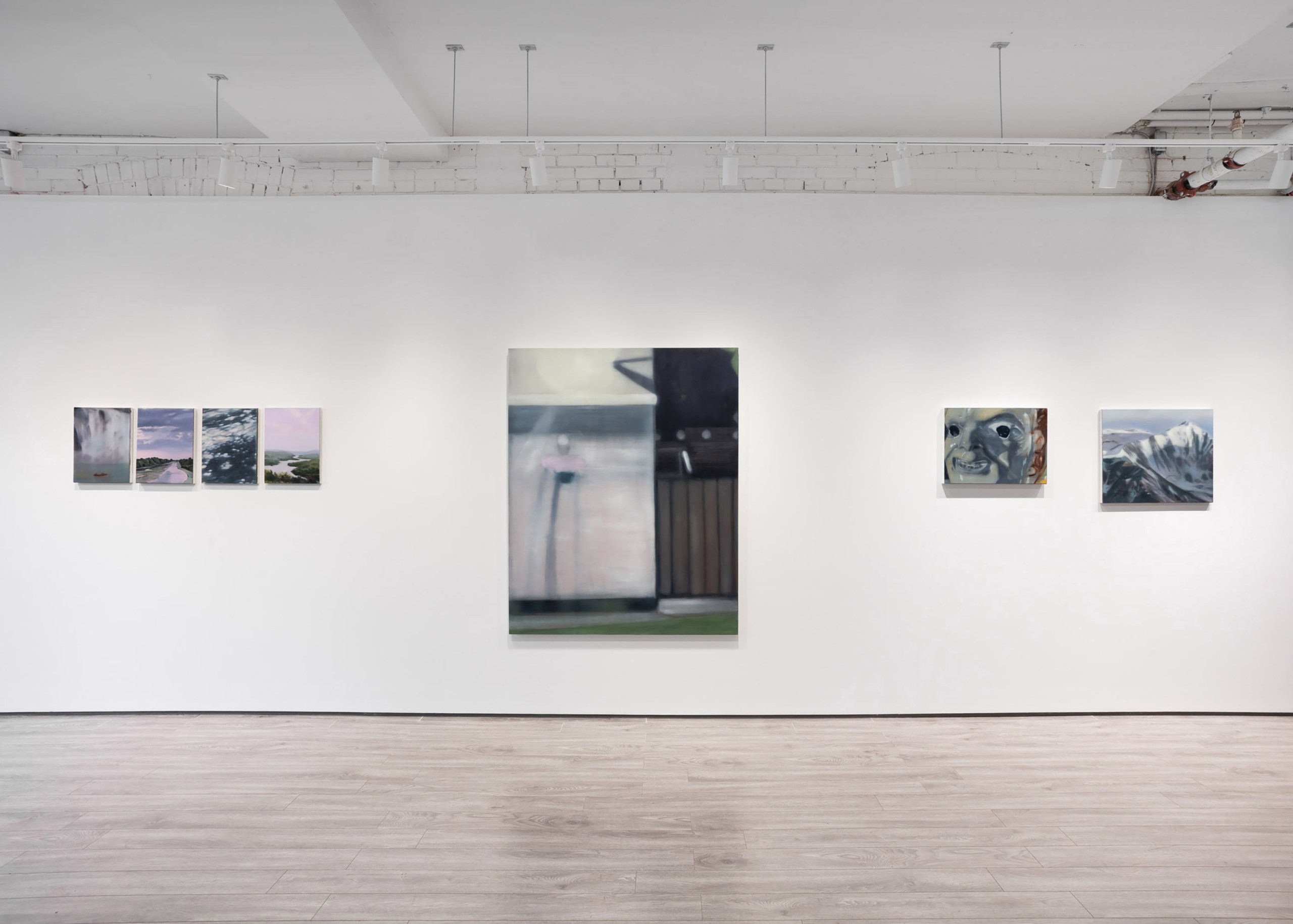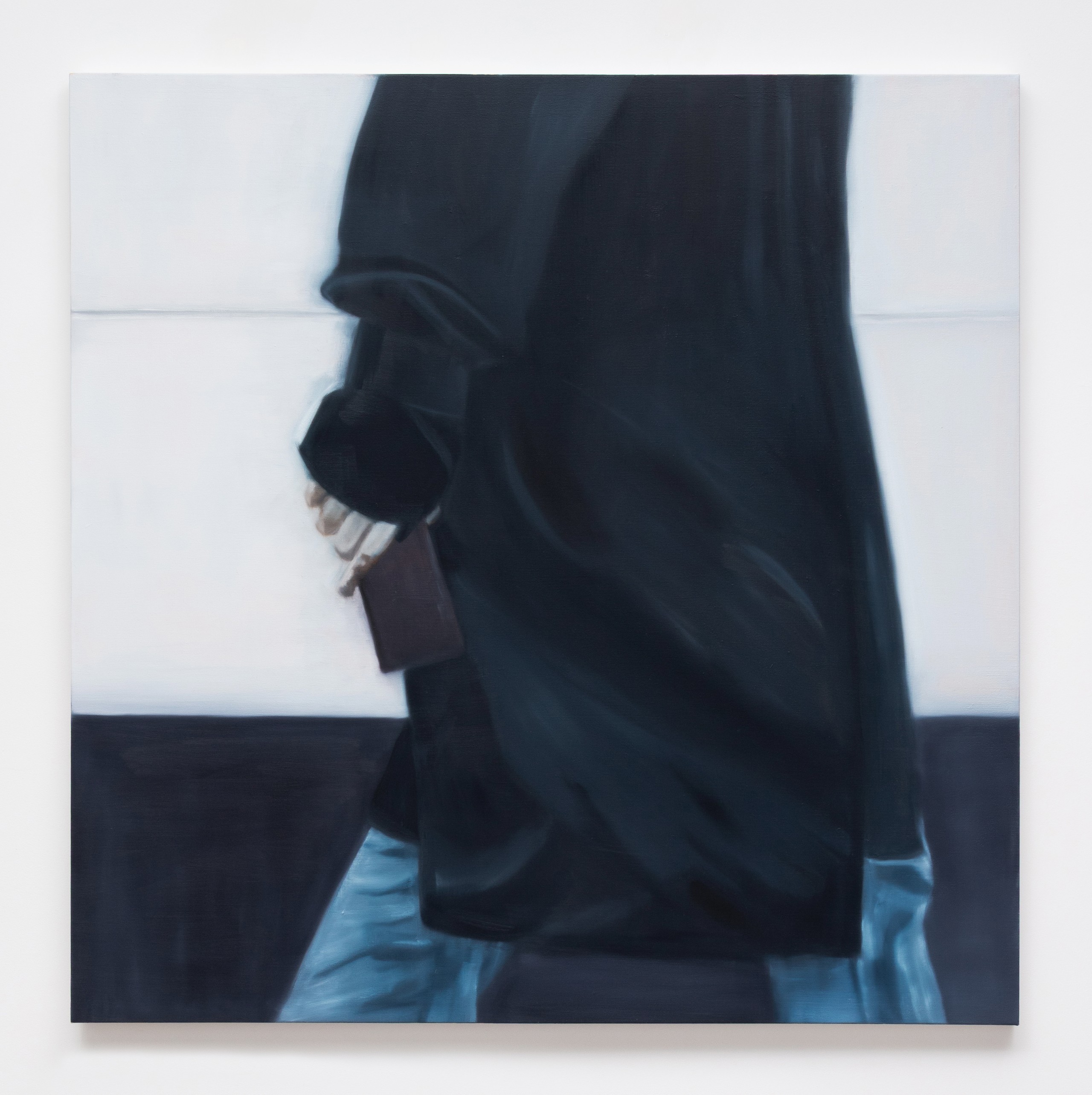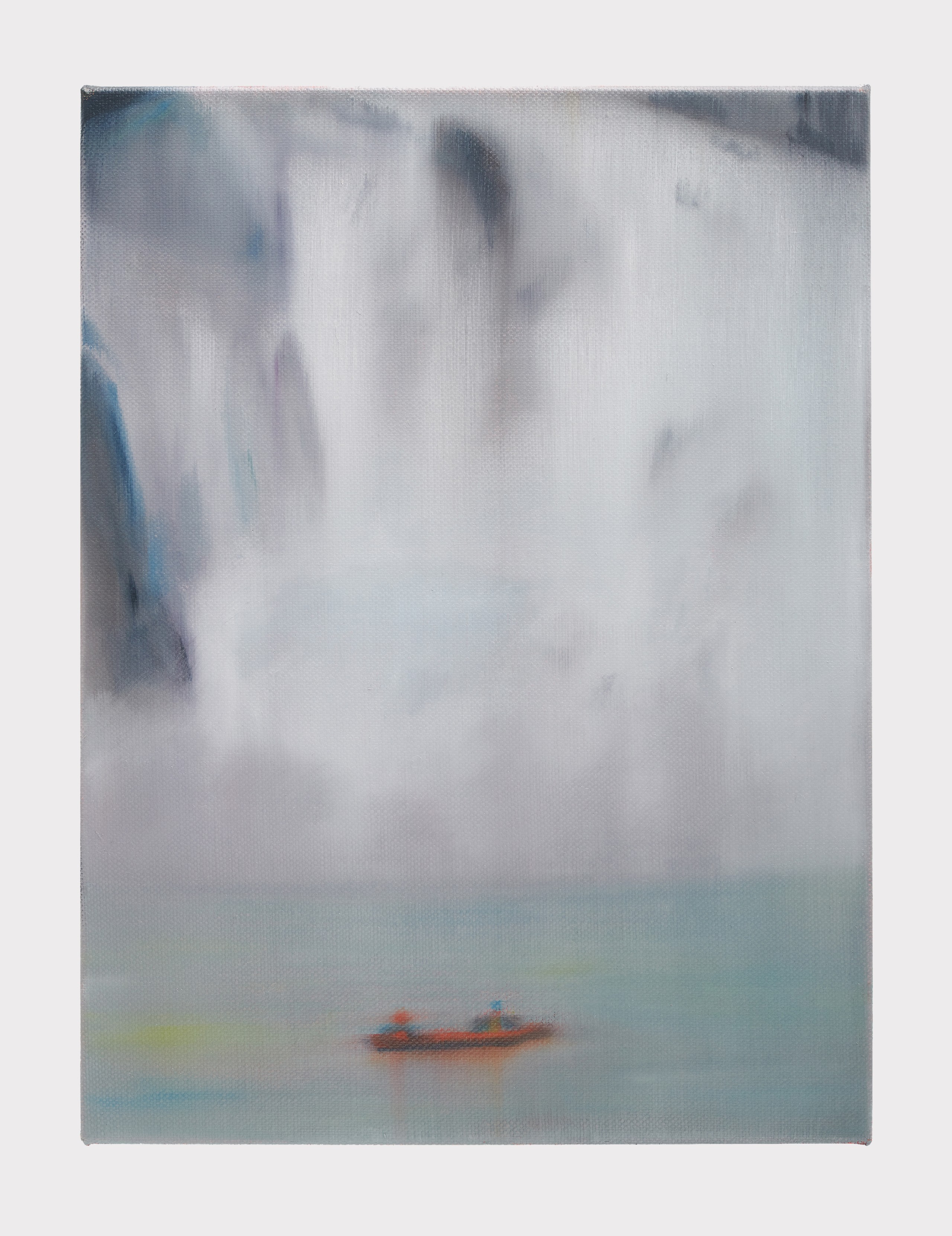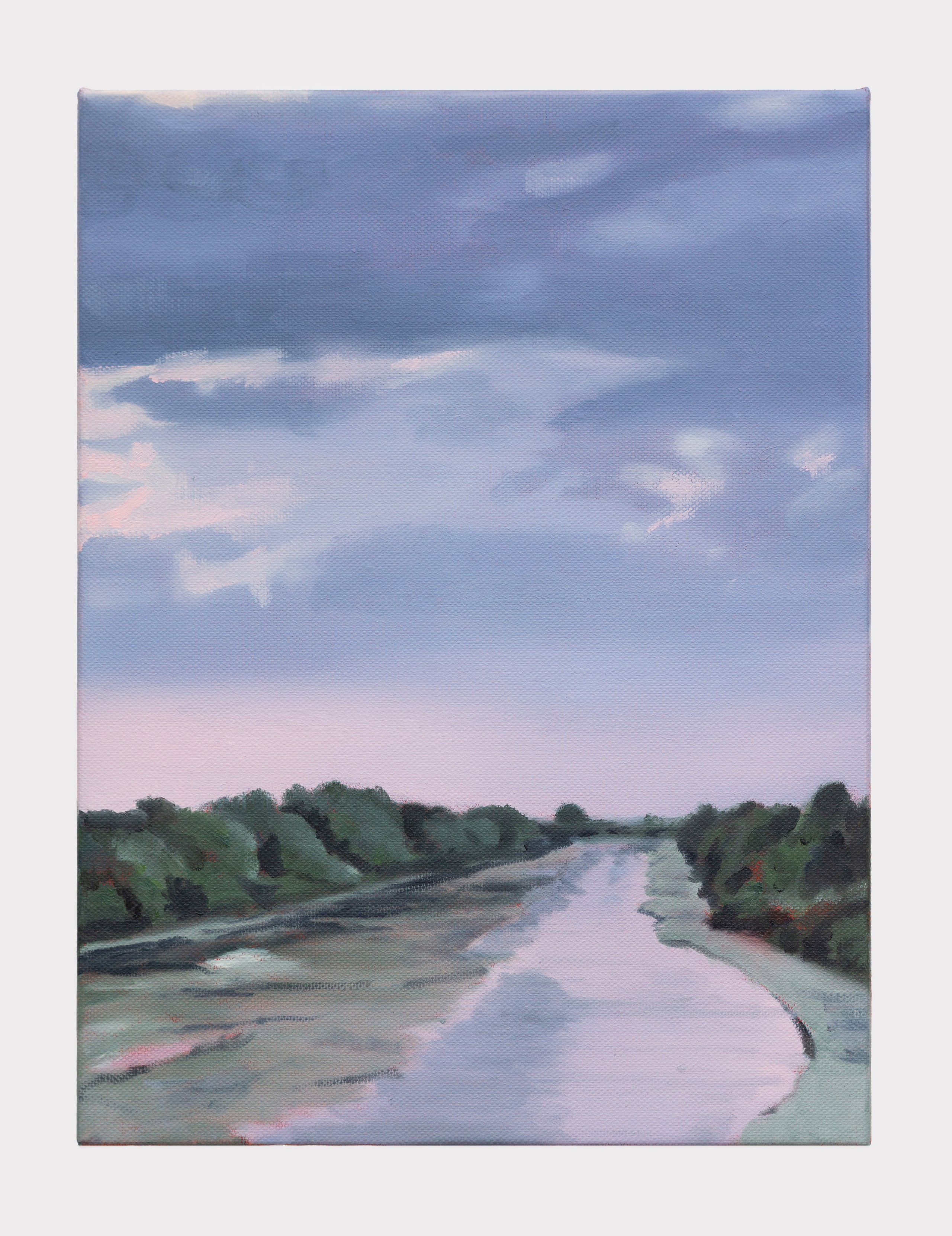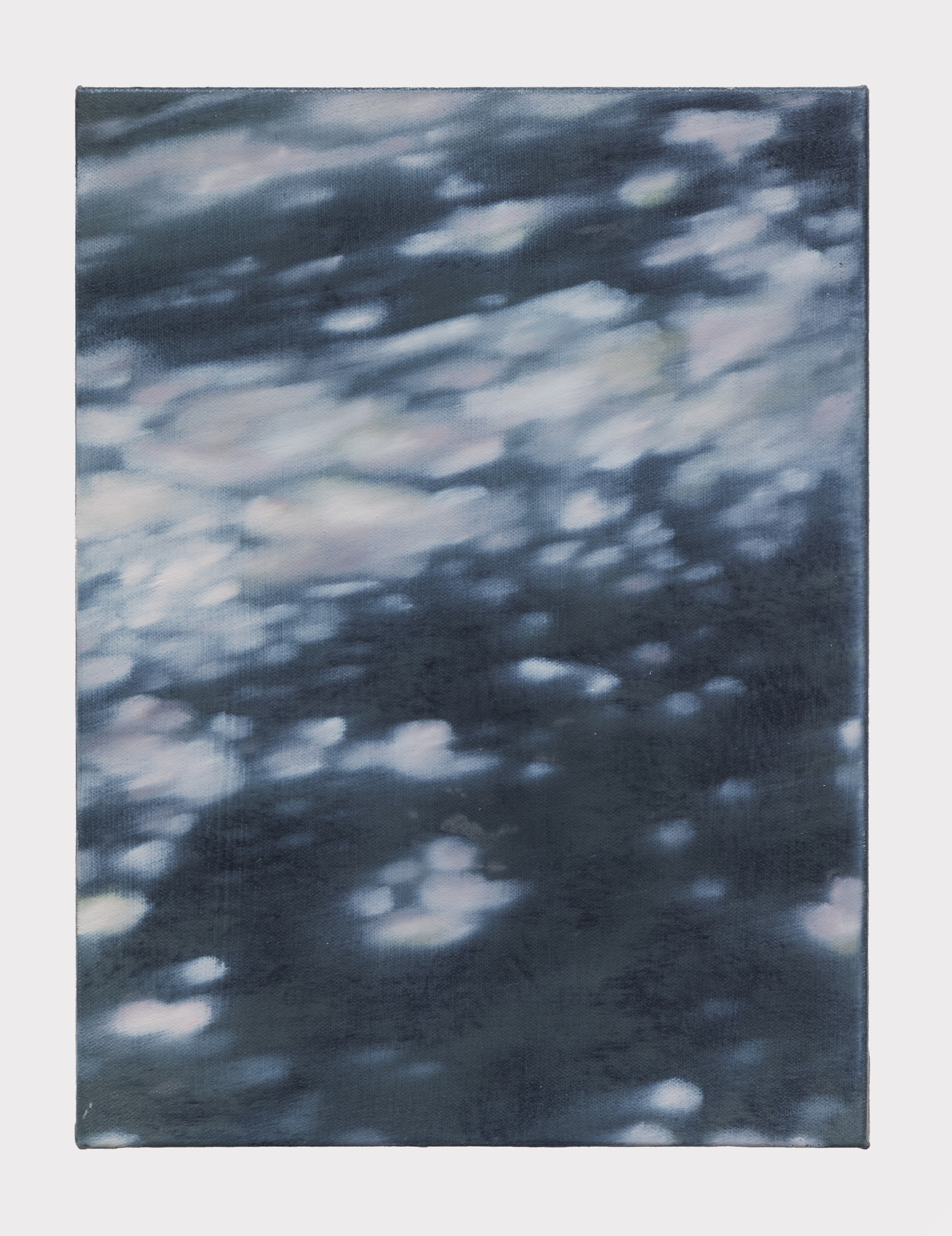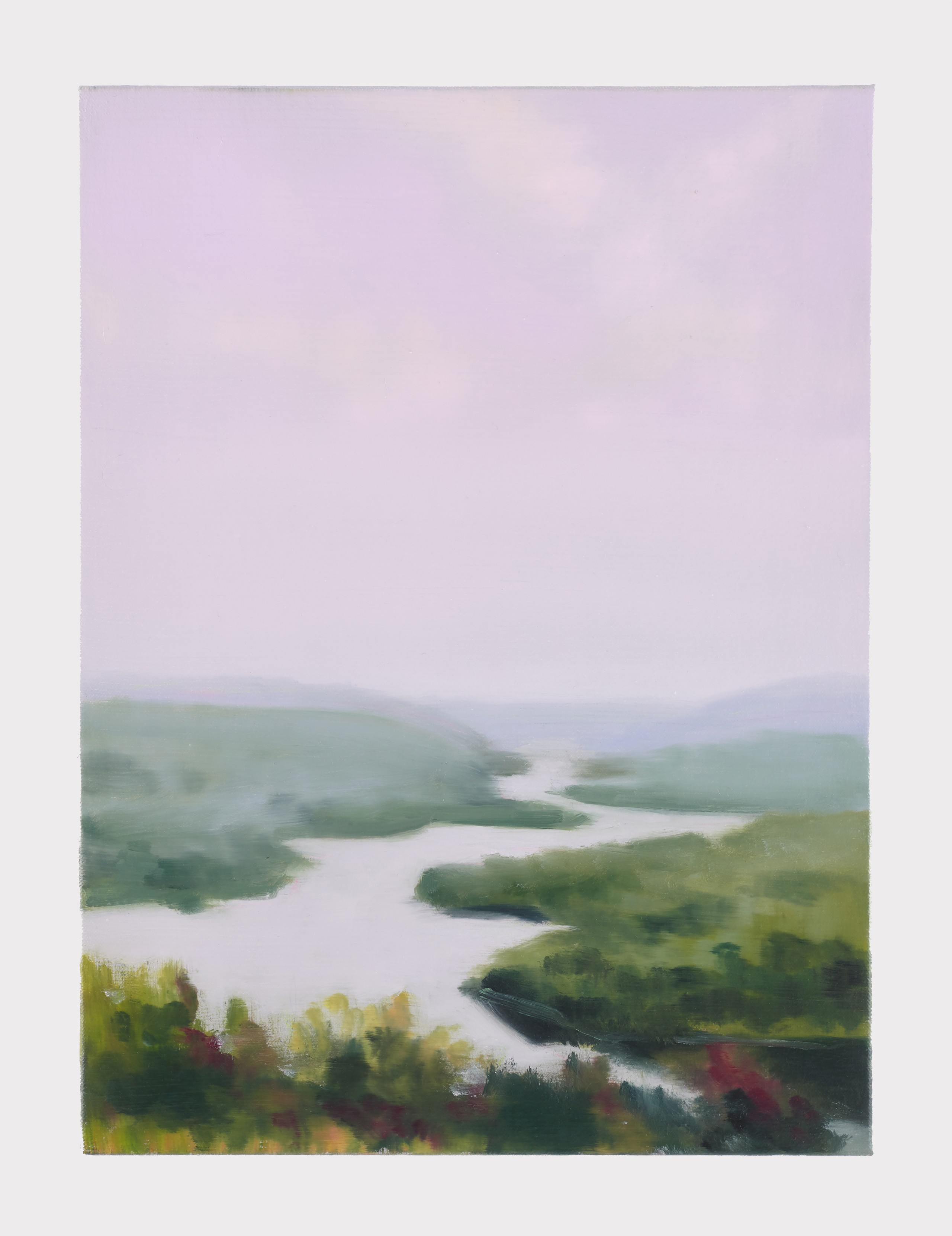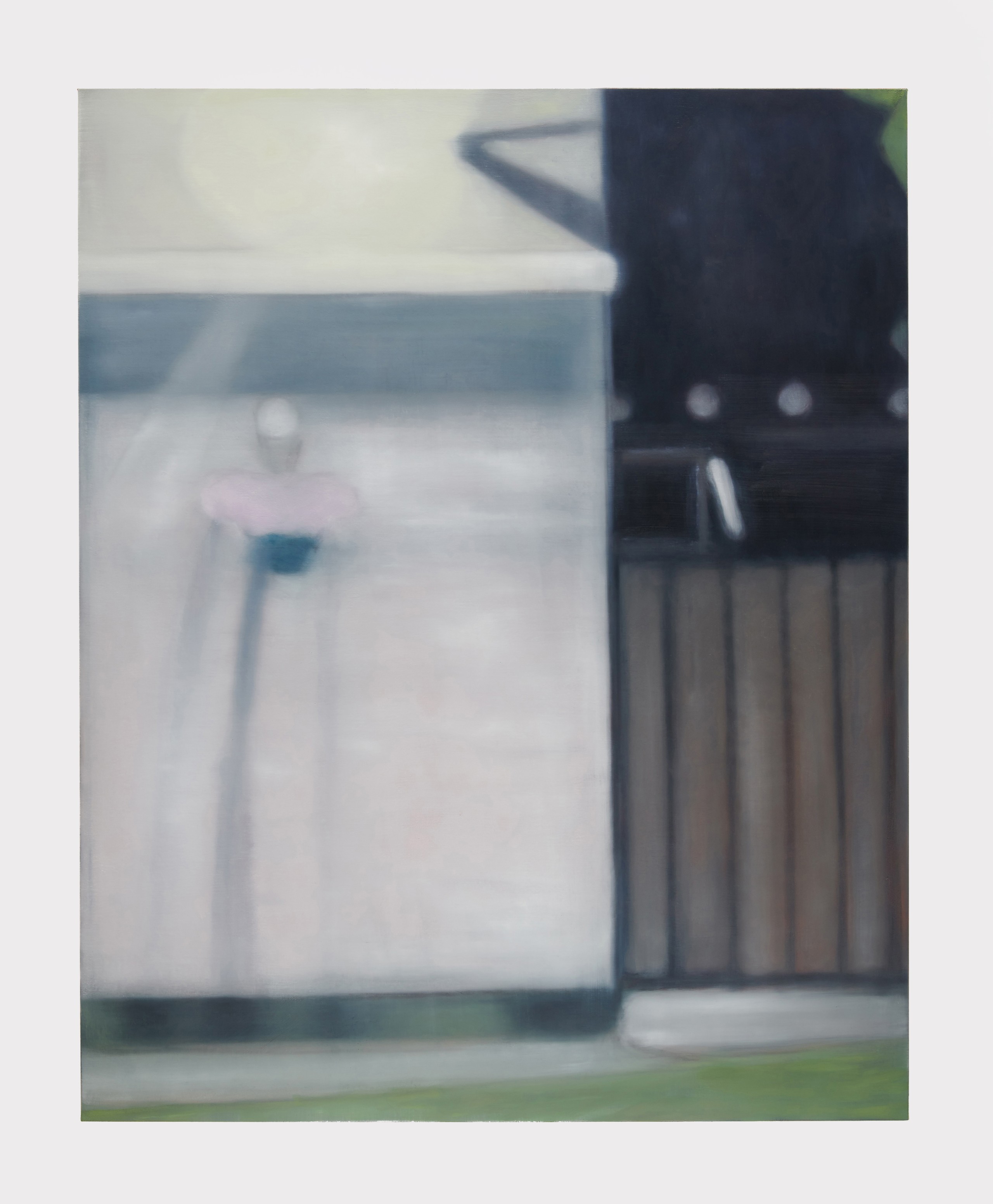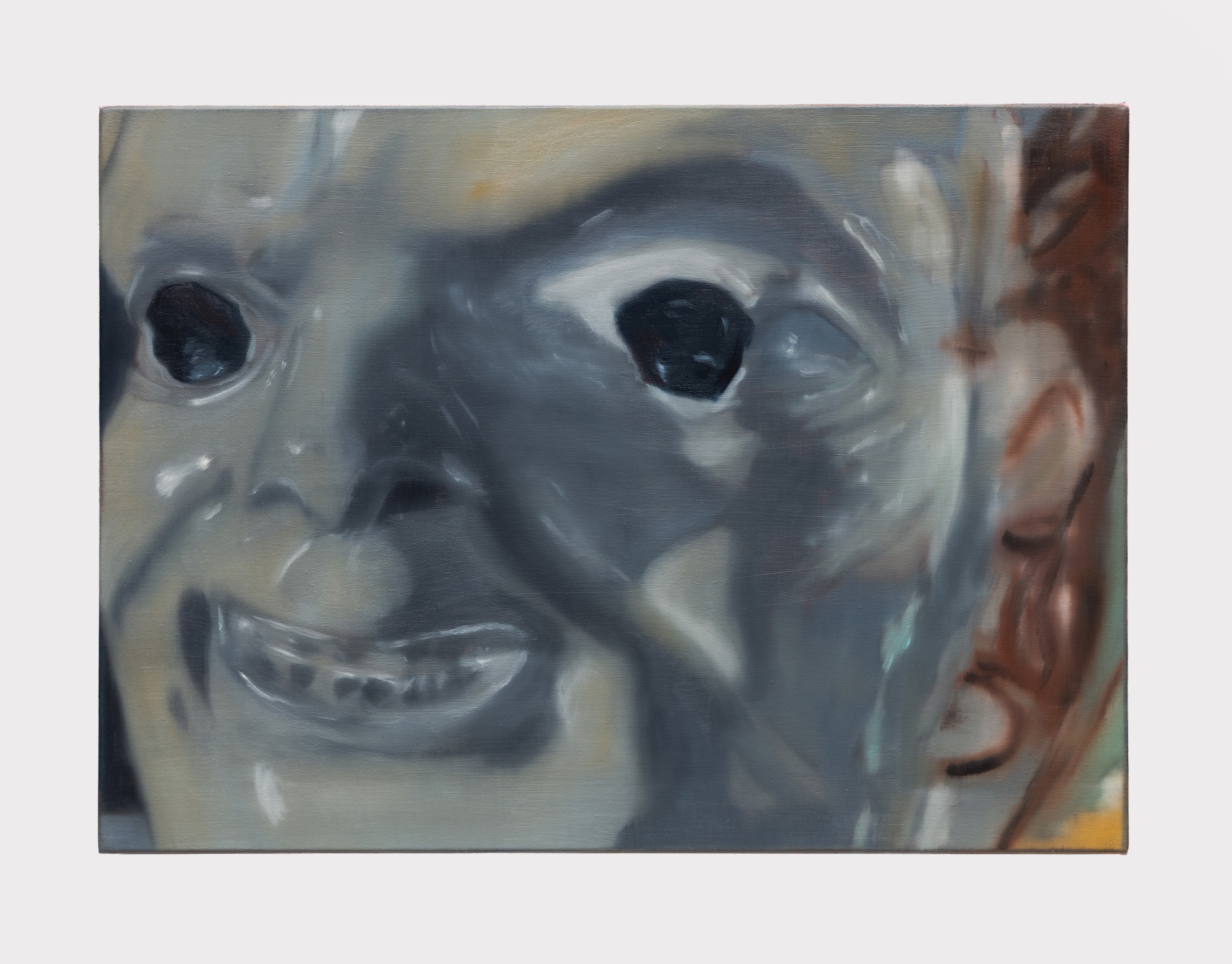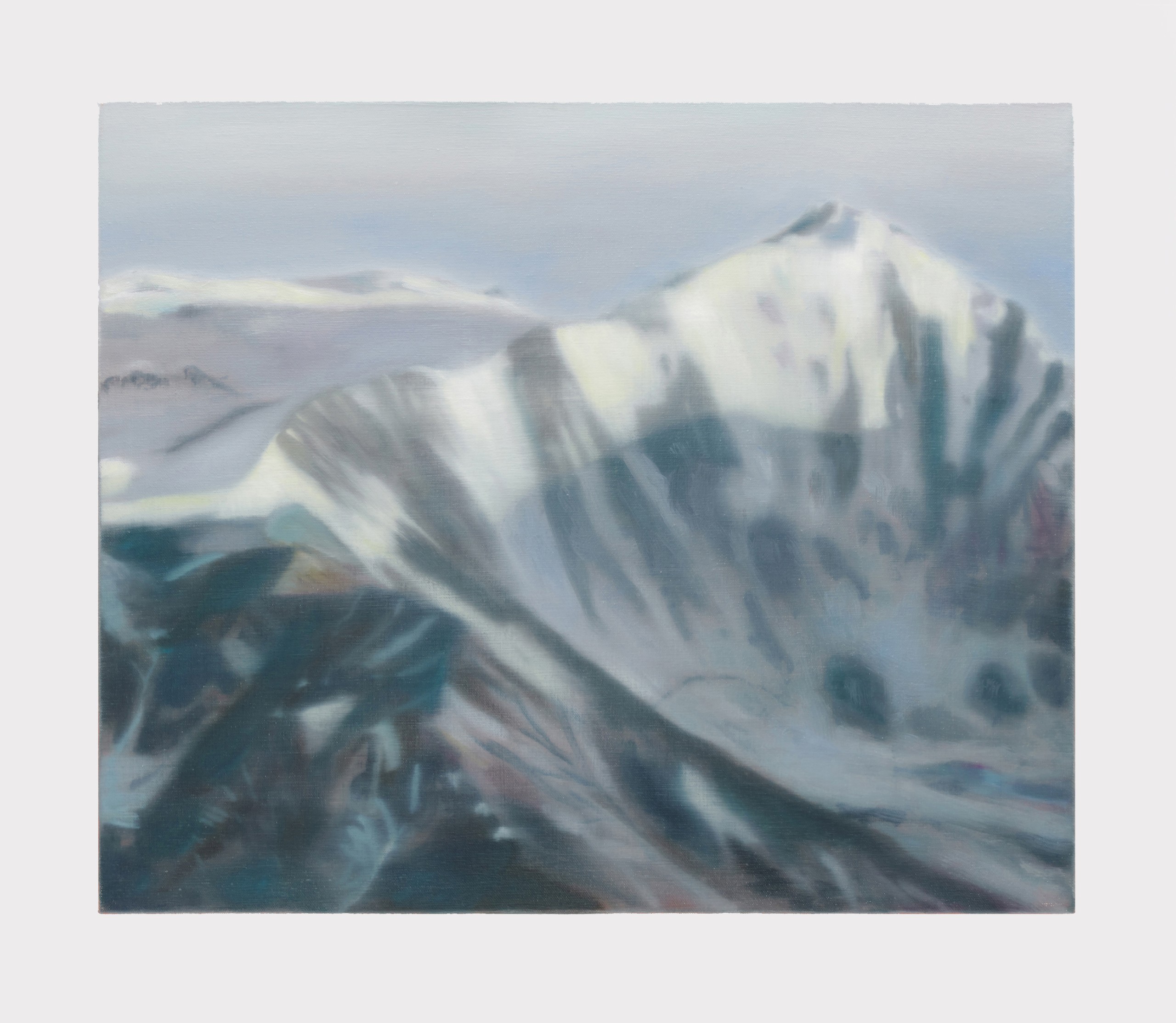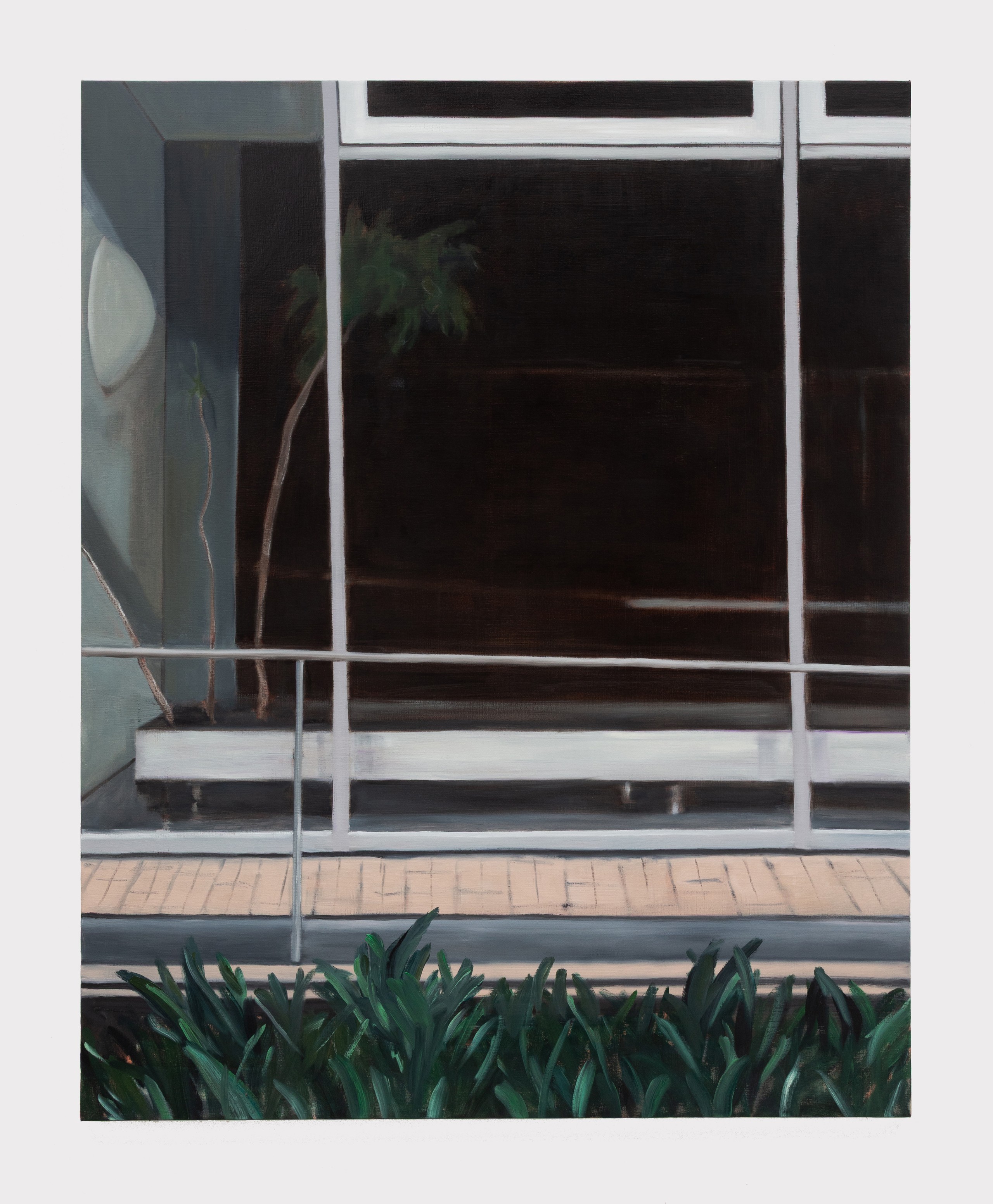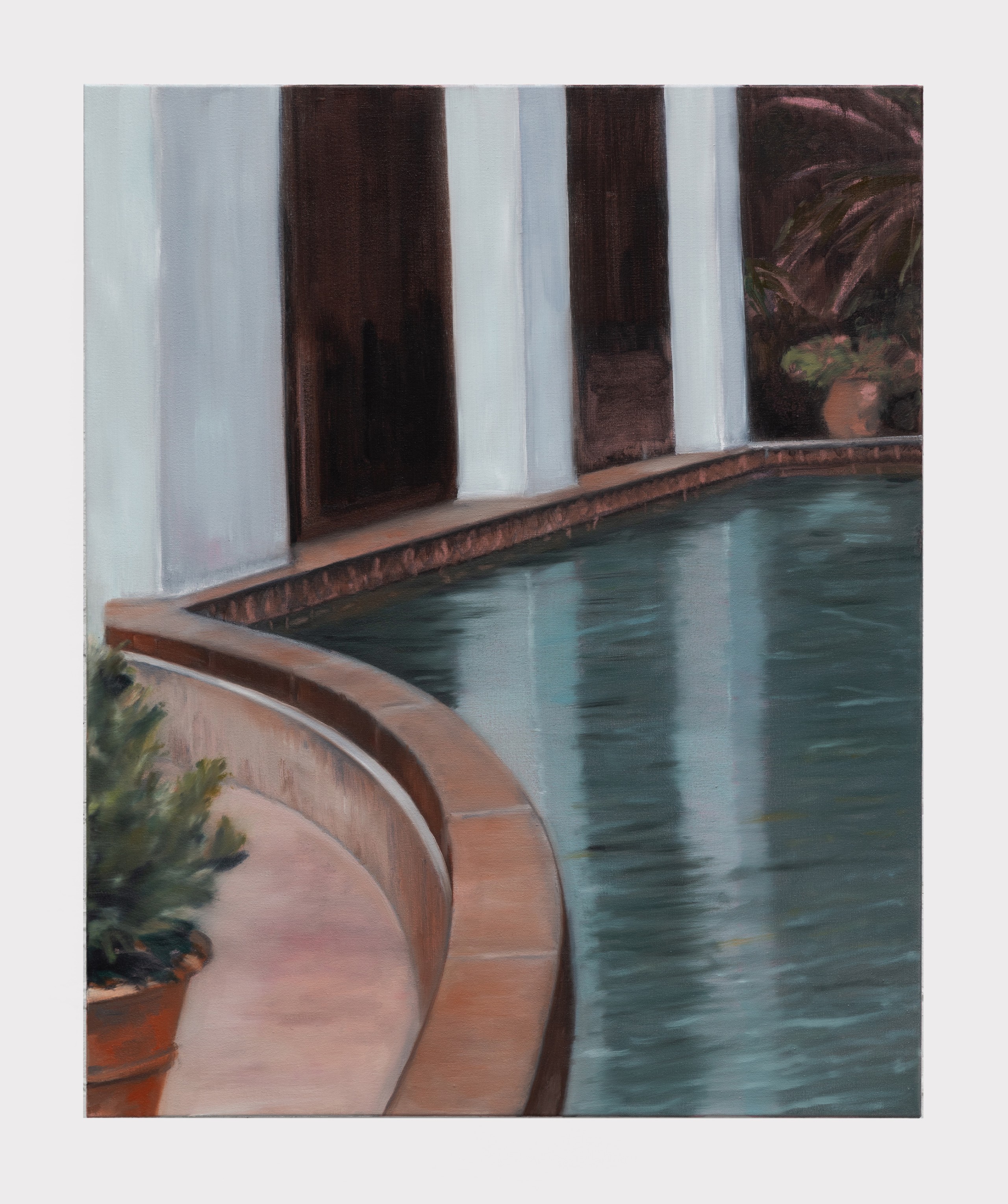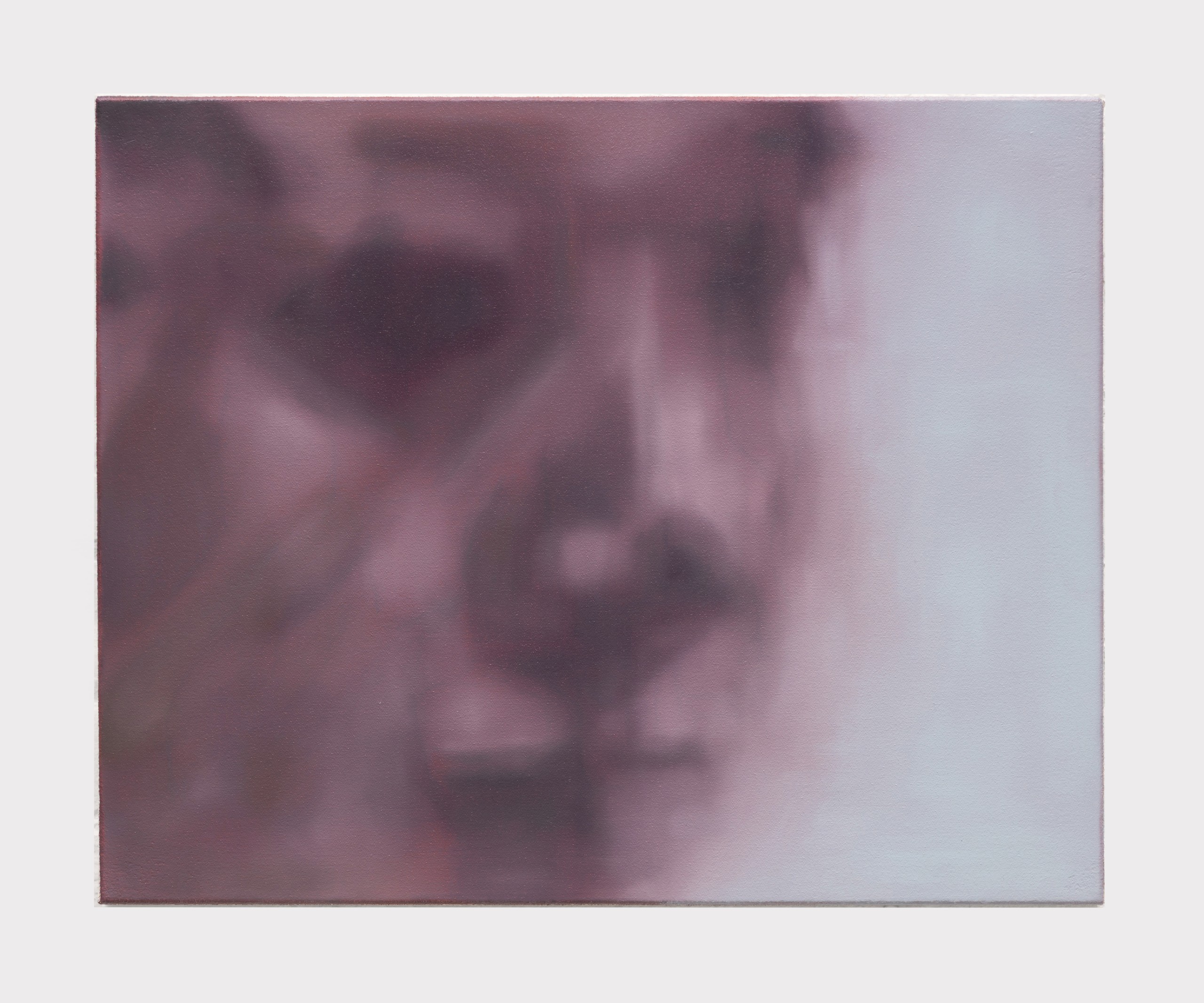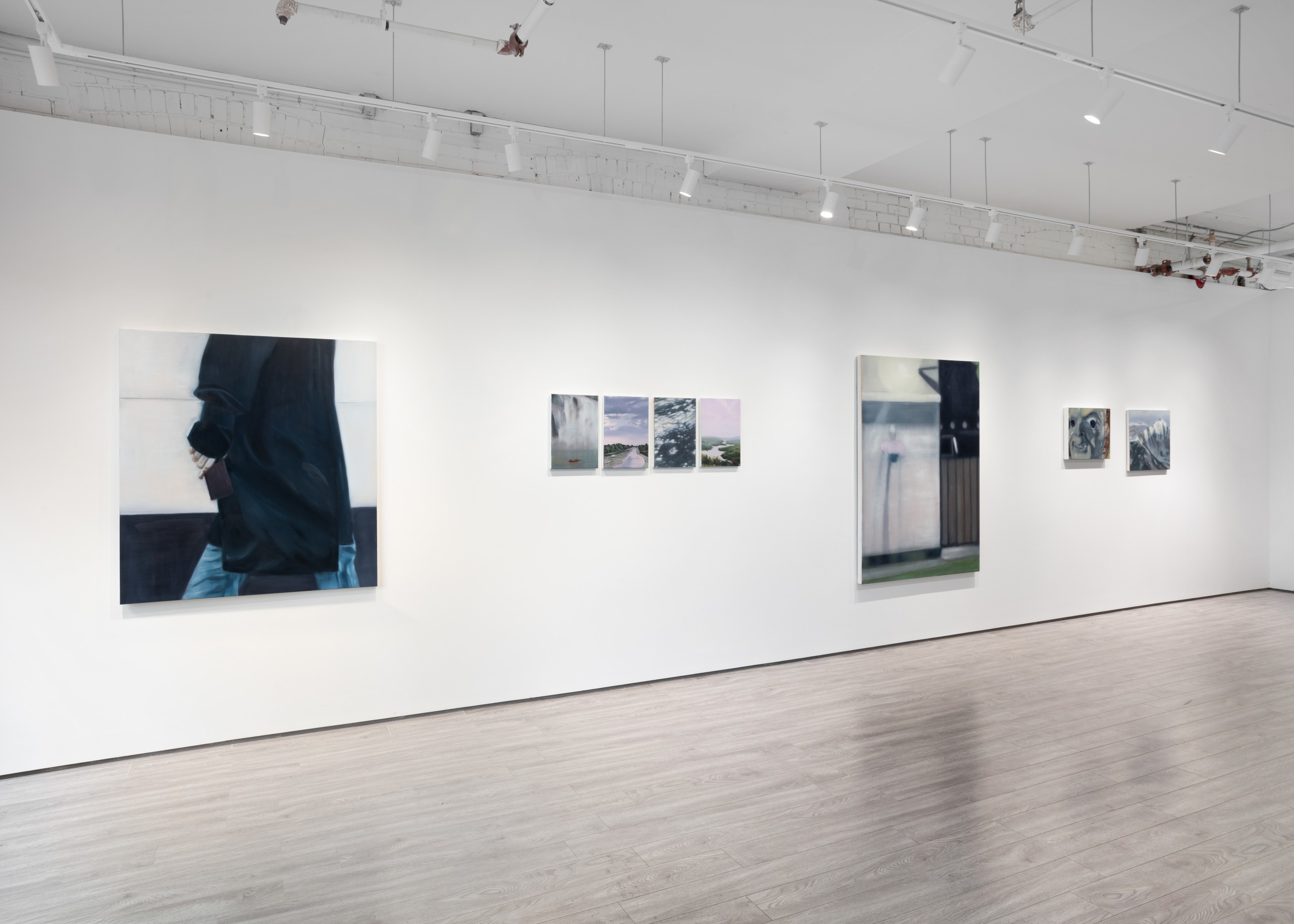
Towards is pleased to present Bury the Lead, an exhibition of new works by Matt Schust. The exhibition brings together the artist’s recent oil paintings – narrative-rich scenes wrested by bold formalism. An exhibition text by Ananda Pellerin appears below.
–
Exhuming the Lead
“It’ll never be known how this has to be told, in the first person or in the second, using the third person plural or continually inventing modes that will serve for nothing.” – Julio Cortázar
The term ‘bury the lead’ comes from journalism.1 It’s what we say when a writer doesn’t open a story with the most important information. A young woman in a plaid top, midi-skirt and mary janes was seen cavorting with an older man in a secluded park. There was a dead body in the bushes behind them.
It’s not just writers who do this. Burying the lead is a regular enough occurrence that it’s entered the common lexicon. A friend says, I went back to the store because I forgot to buy tomatoes. They only had that mealy variety, but I got them anyway. I was fired this morning. What we choose to emphasize betrays how we register sensorial and emotional information, and, ultimately, how we contend with or try to control reality.
In her role as half of a cavorting couple in a London park, Vanessa Redgrave catches the lens of Thomas (David Hemmings), the desultory fashion photographer in Michelangelo Antonioni’s 1966 arthouse thriller Blow-Up. Thomas sees a dead body behind the intriguing pair, but only in blurry abstraction after he enlarges shots of the tryst. Returning to the green field at night, he gets a frontline view of the corpse. The next morning he returns with his camera but the body is gone. We know that Thomas is unfulfilled. He longs to take meaningful pictures. Does this desire for legitimacy cloud his judgement – is there really a dead body?
Blow-Up is an enduring touchpoint for Toronto-based painter Matt Schust. Like Antonioni, the artist creates attention-grabbing scenes that don’t immediately add up, until we realize the throughline isn’t facts, it’s glimmers and inklings, side stories brought to the fore, plotlines dropped. “I like to pull back details, zoom in or distort in order to create a sense of mystery and stir the imagination,” he recently said. “The end result are images that seem representational and abstract at the same time — something you recognize and also can’t quite put your finger on.” 2
Antonioni’s Blow-Up is based on a 1958 short story by Julio Cortázar. A moment of vulnerability – a teenage boy in potential danger on an embankment in Paris, is captured on camera. It’s not clear whether the threat is real, or if the man taking the photos is projecting his own fears onto what he sees – or both. The shooter searches for certainty by developing increasingly zoomed-in images of the precarious scene. He gets closer to what he saw, but never understands what happened.
On the surface, Blow-Up the film and “Blow-Up” the short story share little in common. But the sentiment is the same: story is story because we wish it so. Facts are meaningful in proportion to our own values, priorities, experiences and expectations – which informs where and how we look, and which leads we choose to bury.
Schust’s nature vistas and cosmopolitan scenes, wide shots and close-ups create and obscure meaning at once, connecting with viewers not through fact, but through emotional register. “My subject matter is not necessarily related by time, subject, or experience, and my intention is to build a wordless narrative,” the artist says. “A hum that can be felt through all my work – something you can feel, if not directly name.”
Over the last three years Schust has reconnected with his freehand drawing practice, bringing figuration and representation into play with his foundational abstraction and signature graphic coolness. Photography remains the artist’s primary raw material, and the works in Bury the Lead feature scenes captured in Toronto, London, UK, and Leipzig, Germany, as well as found photos from books, magazines, and old postcards. Images chosen because they resonate – blown up, cropped, reframed.
The results – elusive, arresting, particular moments – remind us that all painting, whether portraiture, representation or otherwise, is an exercise in choice, and, ultimately, abstraction; the application of pigment, the fabrication of shape and space, the play of light. A story, a film, a painting might be telling you one story, but it’s probably just a beautiful prevarication. – Ananda Pellerin
–
1The traditional spelling is ‘lede’, to avoid potential confusion with ‘lead’ in a fast-paced newsroom.
2 From an interview with CBC Senior Writer Leah Collins (28 June, 2026)